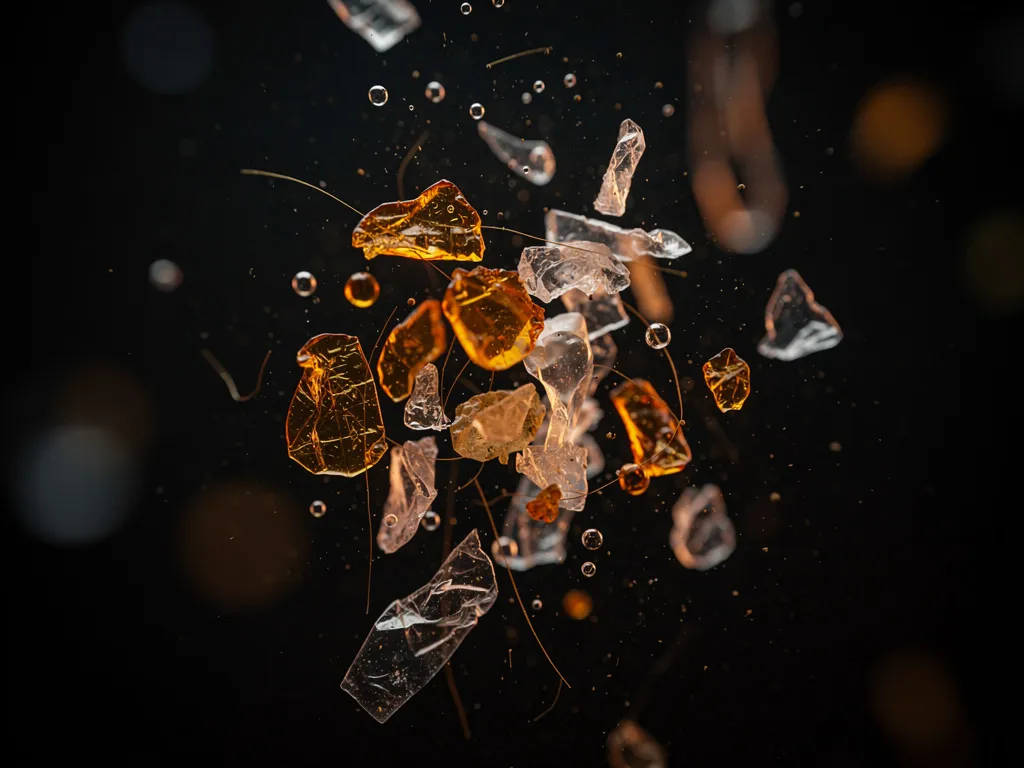
A standard PE-coated paper cup releases approximately 25,000 microplastic particles into a hot beverage at 85–95°C in under a minute. These particles are too small to see but accumulate in the body over time.
This is not a theoretical projection or a worst-case laboratory scenario. It is the finding of peer-reviewed research from the National Institute of Standards and Technology (NIST, 2022), confirmed independently by the Indian Institute of Technology, Kharagpur (Ranjan et al., 2023) using cups purchased from Indian markets. For a country where an estimated 15 billion paper cups are consumed annually — overwhelmingly for hot chai and coffee — the scale of exposure is staggering.
How Paper Cups Create Microplastics
Contrary to common perception, paper cups are not made entirely of paper. To prevent liquid from seeping through the cellulose fibers, manufacturers apply an inner lining of polyethylene (PE) — a petroleum-derived plastic film typically 15–20 microns thick. This PE lining is what makes the cup waterproof. It is also what makes it a microplastic delivery system.
When hot liquid (above 70°C) contacts the PE lining, thermal stress causes the polymer to degrade at a microscopic level. The lining does not visibly melt, but it sheds nano-scale and micro-scale plastic fragments into the liquid. The hotter the liquid and the longer the contact time, the greater the particle release.
The NIST study used fluorescence microscopy to count particles ranging from 30 nanometers to 10 micrometers. At these sizes, particles are invisible to the naked eye — and small enough to cross biological membranes in the gut, lungs, and bloodstream.
India's Chai Culture Amplifies the Risk
India's relationship with hot beverages makes this finding particularly relevant. Consider the typical use pattern:
- Chai is brewed at 90–100°C and served immediately in paper cups
- Roadside chai stalls often pre-pour into cups that sit for several minutes
- Office chai machines dispense directly into PE-lined cups
- Coffee chains serve beverages at 75–85°C with 15–30 minute consumption times
Each of these scenarios involves prolonged contact between near-boiling liquid and polyethylene — exactly the conditions that maximize microplastic shedding. The IIT Kharagpur study found that PE-lined cups commonly available in Indian markets released between 15,000 and 30,000 microplastic particles per cup when exposed to water at 85°C for 15 minutes.
Do the arithmetic: 25,000 particles per cup. Three cups of chai per day. 365 days per year. That is over 27 million microplastic particles ingested annually by a single regular chai drinker — from cups alone.
What PLA Does Differently (Not Much)
PLA (polylactic acid) cups are marketed as the "plant-based" alternative, but they offer no meaningful improvement in microplastic safety. PLA is classified as a thermoplastic polyester by both the European Chemicals Agency and the EU Single-Use Plastics Directive. A 2023 study in Environmental Science & Technology found that PLA products shed microplastic particles under UV exposure and mechanical stress — conditions present in any waste management chain.
The University of Gothenburg demonstrated that PLA microplastics exhibit similar ecotoxicity profiles to conventional microplastics when ingested by organisms. Being derived from corn starch provides no biological advantage once the polymer has fragmented into particles small enough to enter cells.
What Aqueous Coating Eliminates
Aqueous coating is a water-based barrier technology that uses mineral compounds (kaolin clay, calcium carbonate) and modified starches to create a liquid barrier on paper. Unlike PE and PLA, aqueous coating contains zero polymer chains — it is not a plastic in any chemical or regulatory sense.
Because no polymer is present, there are no polymer chains to fragment. Pratva's aqueous-coated cups have been tested at temperatures up to 100°C with zero detectable microplastic or nanoparticle release. The coating is FDA 21 CFR compliant for food contact and FSSAI compliant for food use in India.
The coating also fully disperses during standard paper recycling — which is why CPPRI (Central Pulp and Paper Research Institute) has certified Pratva's cups as re-pulpable. They can be recycled alongside newspaper and cardboard through India's existing kabadiwalla and paper mill network.
Health Implications: What Research Shows
Endocrine disruption: Microplastics carry chemical additives (plasticizers, stabilizers, colorants) that leach into surrounding tissue. Phthalates and bisphenol analogues — established endocrine disruptors — are commonly found in microplastic particles recovered from food packaging.
Inflammatory response: A 2022 study in Exposure and Health found that microplastic particles smaller than 10 microns penetrate intestinal epithelial cells, triggering localized inflammatory responses. Chronic low-level inflammation is linked to inflammatory bowel disease, metabolic syndrome, and cardiovascular disease.
Systemic accumulation: Unlike many toxins, microplastics are not efficiently eliminated by the body. Researchers have detected microplastic particles in human blood, lung tissue, placental tissue, and brain tissue — suggesting they circulate systemically and accumulate over a lifetime.
FSSAI's Position and the Regulatory Gap
FSSAI currently requires food-contact packaging to be made from food-grade materials, but does not mandate testing for microplastic shedding. A PE-coated cup with food-grade polyethylene meets current FSSAI compliance — even though it releases tens of thousands of plastic particles into every hot drink served in it.
This regulatory gap will not last indefinitely. The European Union is already restricting microplastic-shedding materials in food contact applications. India's Bureau of Indian Standards is reviewing microplastic migration standards. Companies that switch proactively avoid the disruption of mandatory reformulation later.
The Business Decision
For hospitals serving patients, corporate offices serving employees, restaurants serving customers, and institutions serving students — the question is no longer theoretical. The research is peer-reviewed, replicated, and specific to Indian market conditions. The alternative (aqueous coating) exists, is CPPRI-tested, and costs only 8–15% more per unit than PE.
25,000 particles per cup. Every cup. Every day. The science is clear. The alternative exists.
References
- Zangmeister, C.D., et al. (2022). "Common Single-Use Consumer Plastic Products Release Trillions of Sub-100 nm Nanoparticles per Liter into Water during Normal Use." Environmental Science & Technology, 56(9), 5448–5455.
- Ranjan, V.P., et al. (2023). "Microplastics Release from Disposable Paper Cups into Hot Beverages." Journal of Hazardous Materials, 441, 129901.
- Danopoulos, E., et al. (2022). "A Rapid Review and Meta-regression of the Toxicological Impacts of Microplastic Exposure in Human Cells." Exposure and Health, 14, 865–898.
- Leslie, H.A., et al. (2022). "Discovery and Quantification of Plastic Particle Pollution in Human Blood." Environment International, 163, 107199.
Using PE-lined cups in your business? Request a free Pratva sample pack — we send 3 cup sizes + kraft bag samples with the coating spec and test reports. No commitment.