India's packaging market is flooded with "eco" claims. Products carry labels like "biodegradable," "compostable," "plant-based," and "earth-friendly" — terms that have no standardized definition in Indian regulatory frameworks and no verifiable testing protocol behind them.
In this environment of vague claims and greenwashing, one certification stands out for its scientific rigor and practical relevance: CPPRI re-pulpability certification.
What Is CPPRI?
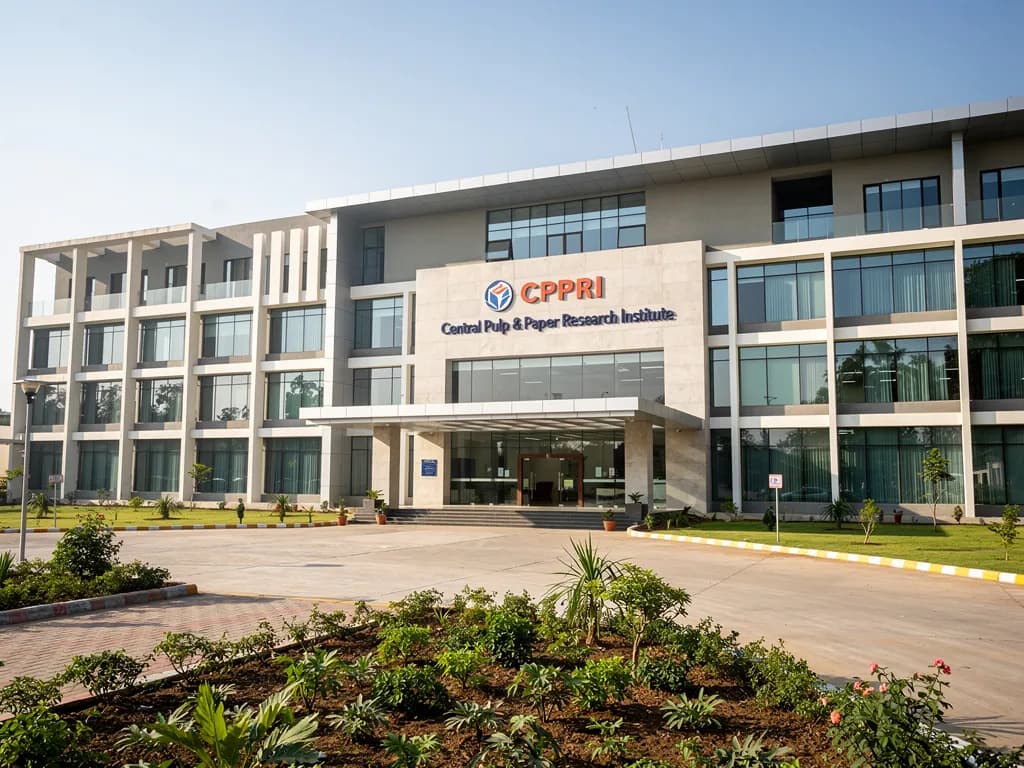
The Central Pulp and Paper Research Institute (CPPRI) is a Government of India research institution located in Saharanpur, Uttar Pradesh. Established in 1965, it operates under the Ministry of Commerce and Industry and serves as India's primary research body for pulp, paper, and packaging science.
CPPRI's laboratory conducts testing across paper quality, fiber analysis, coating chemistry, and — critically — re-pulpability assessment. Their certification is recognized by the Bureau of Indian Standards (BIS) and is increasingly referenced in government procurement specifications.
What Does Re-Pulpability Testing Involve?
Re-pulpability is the ability of a paper product to be broken down into its constituent fibers in a standard paper mill pulping process. The CPPRI test protocol includes:
1. Soak and disintegration test: The coated paper product is soaked in water at controlled temperature and agitated in a laboratory disintegrator. The test measures how completely the coating disperses and whether the paper fibers separate cleanly.
2. Fiber recovery measurement: After disintegration, the fiber yield is measured. A re-pulpable product should achieve 85%+ fiber recovery — meaning the vast majority of paper content can be reclaimed for new paper production.
3. Contaminant analysis: The filtrate is analyzed for polymer residues, non-dispersible coatings, and plastic fragments. Any continuous plastic film (PE, PLA, or other polymers) will fail this stage.
4. Handsheet formation: Recovered fibers are formed into test handsheets to verify that they retain sufficient quality for recycled paper production — confirming practical recyclability, not just theoretical disintegration.
The entire protocol is designed around one practical question: can this product be processed by an ordinary Indian paper mill without contaminating the recycling stream?
Why Re-Pulpability Is the Only Metric That Matters in India
India's waste management reality is different from Europe's or America's. We don't have widespread industrial composting. We don't have separate bioplastic collection streams. What we do have is a vast, informal paper recycling network — kabadiwallas, paper traders, and small mills that process millions of tonnes of waste paper annually.
A re-pulpable cup slots directly into this existing infrastructure. It can be collected with newspaper and cardboard, sold to paper traders, and processed in any paper mill. No special handling required. No industrial composter needed. No separate waste stream.
This is why re-pulpability — not compostability, not biodegradability — is the practically relevant metric for Indian packaging.
How to Verify a CPPRI Certificate
Legitimate CPPRI certification includes:
- A certificate number traceable to CPPRI's Saharanpur laboratory
- Specific product identification (substrate weight, coating type, dimensions)
- Test date and validity period (typically 2 years)
- Fiber recovery percentage achieved in testing
- Signature of the certifying officer
If a packaging supplier claims "CPPRI-tested" but cannot produce the original certificate with these details, treat the claim with skepticism. The certification applies to a specific product configuration — not to a company generally.
You can contact CPPRI directly at their Saharanpur office to verify any certificate number. They maintain records of all certifications issued.
Why Other "Eco" Certifications Fall Short in India
"Compostable" certifications (EN 13432, ASTM D6400): These certify that a product breaks down in industrial composting conditions (58°C+, 90% humidity, 12 weeks). India has fewer than 20 such facilities. Without access to industrial composting, a "compostable" cup is just waste with a premium price tag.
"Biodegradable" claims: No standardized Indian protocol defines conditions or timelines for "biodegradable" packaging. A PE-lined cup will technically biodegrade — in approximately 400 years. The term is scientifically meaningless without specified conditions and timeframes.
"Plant-based" or "bio-based" labels: These describe raw material origin, not end-of-life behavior. PLA is plant-based but behaves as a persistent plastic in Indian waste streams. Origin does not equal environmental performance.
FSC certification: Forest Stewardship Council certification verifies sustainable forestry sourcing. It says nothing about the coating chemistry or recyclability of the final product. An FSC-certified cup with PE lining is still a microplastic source.
The Business Case for CPPRI-Certified Products
For procurement managers evaluating eco packaging claims, CPPRI certification provides:
- Verifiable proof — not marketing copy, but laboratory-tested results
- Practical recyclability — works with India's existing waste infrastructure
- Regulatory alignment — increasingly referenced in government and PSU procurement norms
- Genuine differentiation — separates proven performance from greenwashing
When evaluating packaging suppliers, ask one question: "Can you show me your CPPRI re-pulpability certificate for this specific product?" The answer tells you everything you need to know about whether the eco claims are real or manufactured. For a guide on finding certified suppliers, see our article on CPPRI-tested paper cup suppliers in North India.
Conclusion
In a market saturated with unverifiable green claims, CPPRI re-pulpability certification is India's gold standard for eco packaging verification. It tests the only thing that practically matters: can this product be recycled through India's existing paper infrastructure, without contaminating the stream with plastic?
If the answer is yes — certified, tested, verified — you have genuinely sustainable packaging. Everything else is marketing.
References
- Central Pulp and Paper Research Institute. "Standard Test Methods for Re-pulpability of Coated Paper Products." CPPRI Technical Standards, 2021.
- Ministry of Environment, Forest and Climate Change. "Plastic Waste Management (Amendment) Rules, 2022." Government of India Gazette.
- Centre for Science and Environment. (2023). "Labels vs. Reality: Eco Certifications in Indian Packaging." CSE Assessment Report.
For a detailed look at how CPPRI certification applies specifically to paper cups, see our guide: CPPRI certification for paper cups.